Auto Amazon Links: No products found.
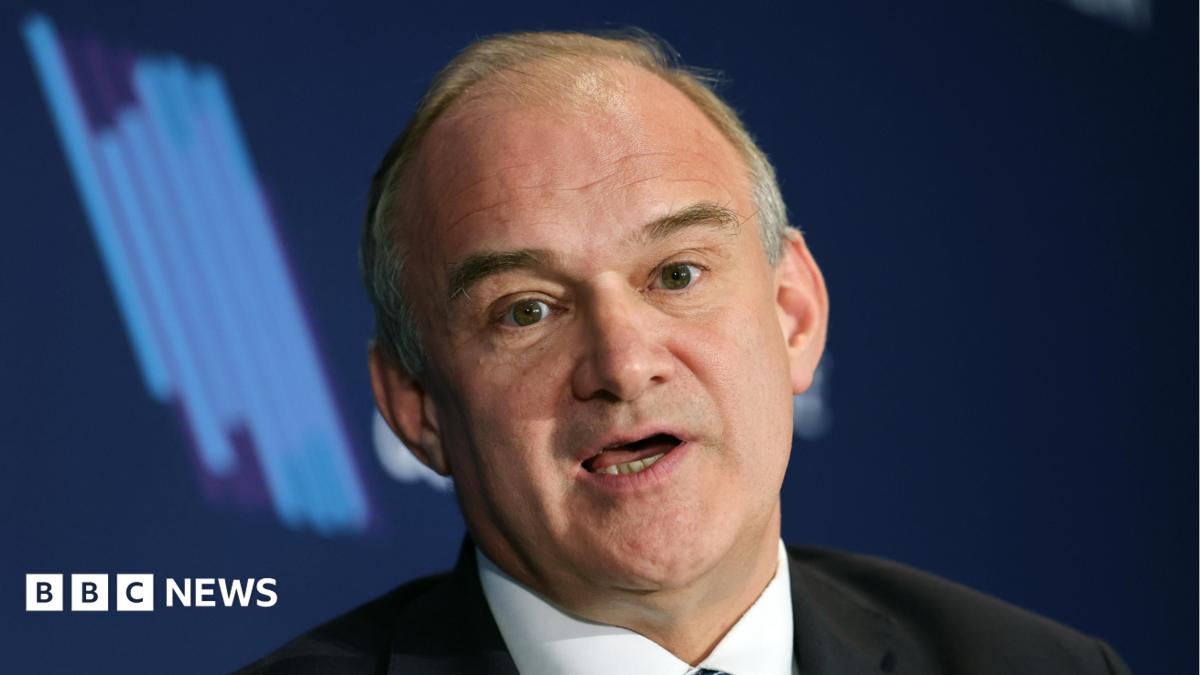
Liberal Democrat leader Sir Ed Davey has proposed that the UK should join the European Union’s recently implemented Migration and Asylum Pact as a strategy to address the issue of small boat crossings in the English Channel. The pact, which was established in June, focuses on accelerating the asylum process, enhancing the return rates of irregular migrants to their countries of origin, and distributing the responsibility for asylum seekers across EU member states.
Sir Ed emphasizes that by entering this agreement, the UK could send asylum seekers back to the first EU country they entered. He believes this would effectively “destroy the business model” used by criminal gangs involved in facilitating these perilous Channel crossings. In contrast, the Labour Party has stated that the UK government’s collaborative efforts with European nations are already yielding positive results in controlling such crossings. A Labour spokesperson noted that over 47,000 attempted crossings have been prevented within two years, and more than 70,000 individuals without legal permission to remain in the UK have been removed. The spokesperson further highlighted that continued progress depends on sustained cooperation with the EU.
Statistics from this year show that the number of people arriving by small boat has dropped to more than 14,000, marking a 43% decrease compared to the previous year. The EU’s new asylum pact, developed over nearly a decade, introduces mandatory screening protocols and an enhanced database to monitor arrivals across the bloc. As part of the agreement, countries that bear the brunt of arrivals, such as Italy and Greece, must be supported either by directly accepting migrants or through additional funding and resources from other member states.
Should the UK choose to participate, it would be expected to take in a limited number of asylum seekers relocated from EU countries. The Liberal Democrats argue that this figure would be smaller than the current number of people reaching the UK by small boat and that all entrants would undergo thorough screening prior to entry. They also suggest that involvement in the pact would reduce taxpayer costs, estimating that the annual expense of around £100 million would be significantly less compared to the £5 billion currently spent on the UK’s asylum system. Sir Ed Davey stated, “We have a plan that would finally end the small boats crisis: a pact with every EU country that will allow us to return people who come over the Channel, taking away the major pull factor that [Reform UK leader Nigel] Farage and co created and destroying the business model of the criminal gangs.”
The discussion around Brexit’s role in small boat crossings has also been noted within the Labour Party, with some politicians suggesting that leaving the EU has contributed to an increase in such crossings. Conversely, Reform UK has rejected these claims, calling them “complete misinformation” and arguing that EU membership “did nothing to make it easier to return asylum seekers.” The new EU pact replaces earlier frameworks, including the Dublin Regulation that previously allowed member states to return asylum seekers to the first EU country they entered. The Dublin system was criticized for disproportionately impacting countries with the highest arrival numbers.
The updated pact introduces a solidarity mechanism designed to redistribute approximately 30,000 asylum seekers across the 27 EU member states. Countries can opt to provide financial contributions of €20,000 (£17,000) per person they decline to accept instead of relocating asylum seekers themselves. Rigorous registration and biometric checks are mandatory to identify individuals aged six and older, with details such as fingerprints stored in the Eurodac database to prevent those posing security or health risks from entering undetected. The UK government has previously expressed an interest in regaining access to this database, which it lost following Brexit. However, joining the pact would require unanimous consent from all EU states, legal reforms in the UK to align with the pact’s terms, and possibly the standardization of asylum procedures in line with EU requirements, making the process complex and potentially challenging
Read the full article from The BBC here: Read More
Auto Amazon Links: No products found.