Auto Amazon Links: No products found.
The Supreme Court has agreed to review the contentious ban imposed on the protest group Palestine Action under terrorism legislation. This ruling marks a significant setback for the Home Office, as the court granted permission on Thursday for the group’s co-founder, Huda Ammori, to appeal against the ban that took effect in July 2025. Although the full reasoning behind the appeal has not yet been made public, the BBC has learned that Ammori contends the ban violates human rights.
The court plans to expedite the appeal process, scheduling it to be heard after the summer recess. The case’s final resolution could have considerable consequences for the UK’s terrorism laws. This development follows closely on the heels of the group’s first major trial, where members were convicted for causing over £1 million in damages to a defence firm near Bristol, which has ties to an Israeli parent company. Four members involved in the break-ins received jail sentences, with one also sentenced for inflicting grievous bodily harm on a police officer who was struck by a sledgehammer.
The controversy surrounding Palestine Action’s proscription has persisted for more than a year. The group was banned by former Home Secretary Yvette Cooper, acting on advice from police and security officials in response to a series of break-ins targeting Elbit, an Israeli-owned defence contractor. Initially, the High Court found the ban unlawful; however, this decision was overturned by five judges on the Court of Appeal, who unanimously ruled that the home secretary acted within her legal powers in proscribing the group. The Supreme Court will now reassess that ruling.
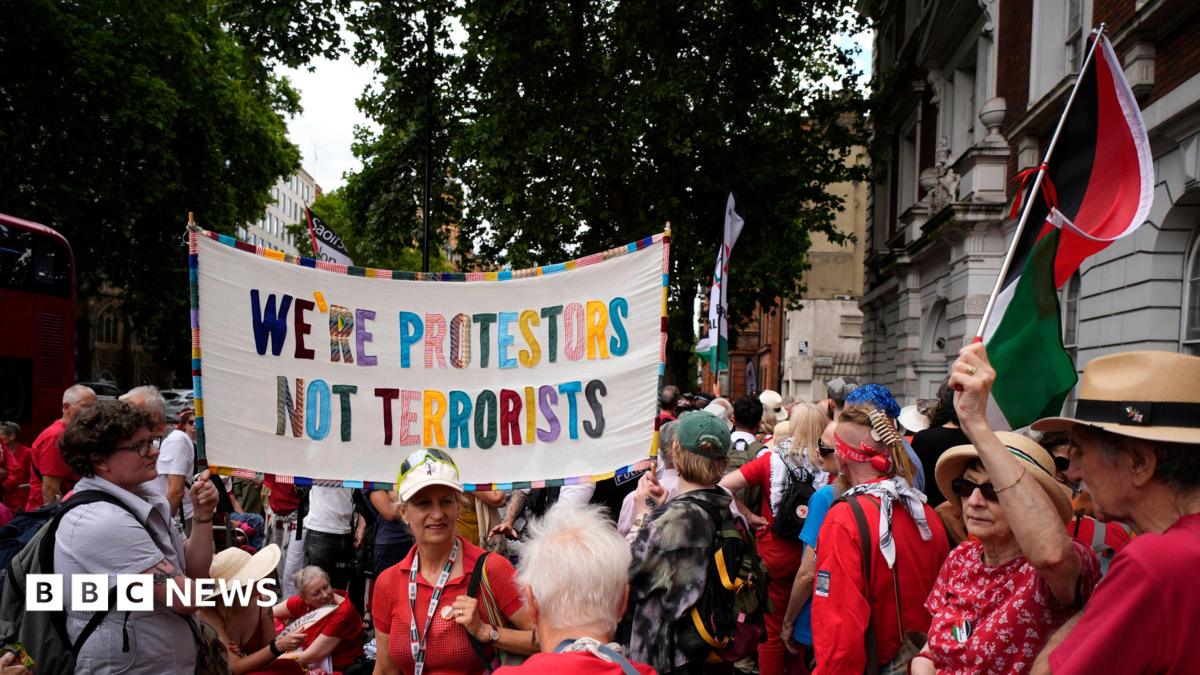
On the same day as the Supreme Court’s announcement, around 117 protesters were arrested outside Westminster Magistrates’ Court. According to the Metropolitan Police, most arrests were related to charges of supporting the banned group. Many protesters had gathered expecting to face court for previous demonstrations showing support for Palestine Action, though these cases were mistakenly listed. Protesters reported feeling compelled to attend despite advisories from both the court and police to the contrary. Ammori welcomed the Supreme Court’s decision and condemned the ongoing arrests as part of a broader crackdown on Palestinian solidarity. She stated, “We will continue to fight this proscription all the way to the Supreme Court and, if necessary, to the European Court of Human Rights to overturn what has become one of the most extreme attacks on free speech and the right to protest in modern British history.”
The Home Office maintains that the ban does not target those protesting in support of Palestinian causes but is aimed specifically at the group’s involvement in extensive criminal damage to legitimate businesses. While both the High Court and Court of Appeal agreed that Palestine Action engaged in criminal behavior, they differed on whether this justified applying terrorism legislation. These laws, passed by Parliament, permit the government to proscribe groups responsible for serious violence or serious criminal damage driven by ideological motives. This designation enables broader police powers to investigate, charge, and disrupt the organization’s activities. The Home Office has indicated it will continue to vigorously defend the ban in the Supreme Court, a position that remains unchanged despite recent changes in government leadership
Read the full article from The BBC here: Read More
Auto Amazon Links: No products found.