Auto Amazon Links: No products found.
Robert Jenrick, representing Reform UK, has called on Prime Minister Andy Burnham to explicitly rule out any future tax increases as a means to fund reforms in adult social care across England. Burnham has expressed a preference for reviewing current government budgets before considering tax hikes, though he has not dismissed the possibility entirely. He acknowledged the challenging decisions ahead, with funding strategies to be detailed in a review scheduled for release next year.
Jenrick argued that the necessary reforms should be financed by reducing foreign aid and cutting benefit payments to migrants. He urged Burnham to reject what he referred to as a universal “death tax.” This term relates to a previous proposal from Burnham’s tenure as health secretary under Gordon Brown’s government, which introduced a compulsory levy on social care costs that could be deferred until after a person’s death. The Conservative Party at the time labeled this plan as a “death tax.” However, Burnham has not proposed reviving an adult social care levy in this particular form.
Burnham emphasized that the 2009 plans were designed to prevent individuals from having to sell their homes to afford care. Addressing recent developments, the prime minister highlighted that resolving issues within the social care system is a top priority. He has accelerated a review led by Baroness Casey, now expected to be published by next summer. Burnham stressed that this review should explore financing options for a national care service, highlighting the need for an integrated system closely connected with the NHS. Additionally, he announced immediate efforts with Chancellor John Healey to improve wages and training for care workers, which would be fully funded through existing budgets. Regarding the broader restructuring, Burnham said he wanted to first maximize existing financial resources before discussing any tax increases.
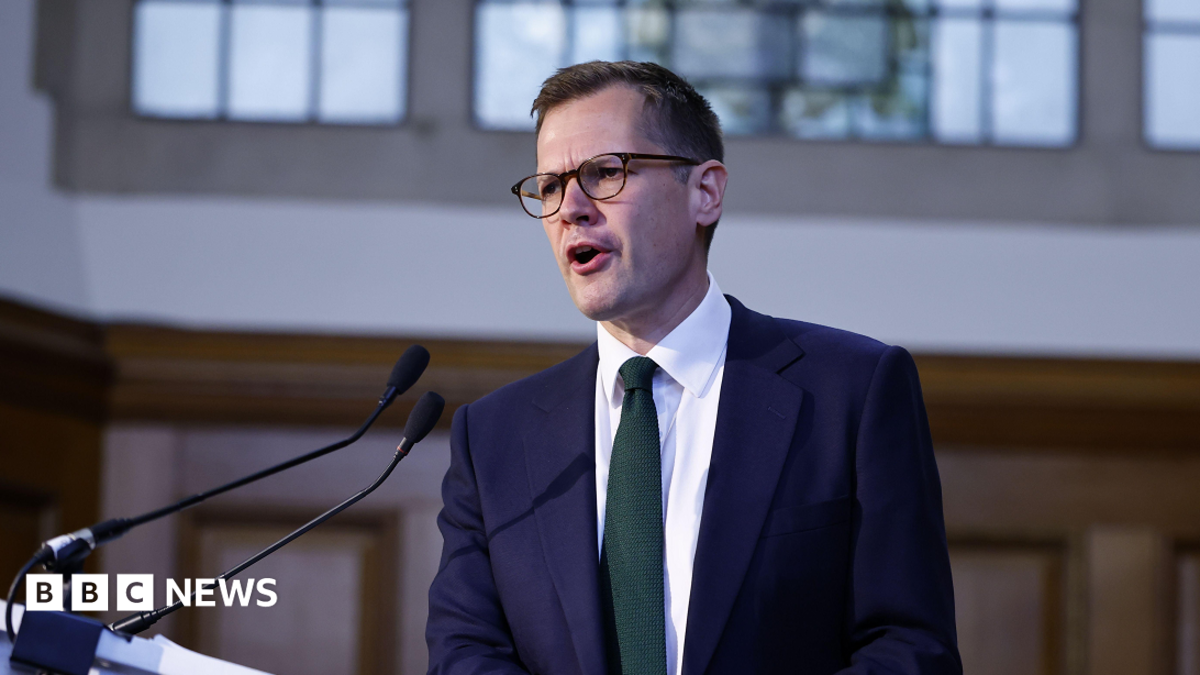
During a press conference, Jenrick was firm in his stance, stating, “He won’t, he can’t, he will not rule out a death tax.” He urged Burnham to eliminate uncertainty by formally dismissing the possibility of such a tax. While agreeing that care workers are “scandalously underpaid,” Jenrick suggested that a government led by Reform would halt visas for foreign workers in order to prioritize employing British citizens. He proposed financing social care improvements by cutting wasteful spending and reducing the foreign aid budget. “I could not look the British taxpayer in the eye and impose a tax—another tax—before I had stopped sending taxpayers’ money to rich countries overseas,” he said.
The Conservatives have also pressured Burnham to reject tax rises or additional borrowing to fund social care reforms. Tory leader Kemi Badenoch wrote to the prime minister, emphasizing that any solution must be equitable for people who have saved over their lifetimes. Jenrick’s comments came shortly after Burnham engaged in discussions with Liberal Democrat leader Sir Ed Davey and shadow health secretary Stuart Andrew in efforts to build cross-party support for forthcoming changes. Notably, representatives from Reform and the Green Party were excluded from these talks, prompting expressions of disappointment. Jenrick remarked he was “not surprised” that Reform leader Nigel Farage was not invited, suggesting Burnham anticipated Farage would oppose perceived betrayals of those who have contributed throughout their lives.
Jenrick reiterated Reform’s commitment to health and social care issues, despite the party not having an official health spokesperson. “We are absolutely at the coalface of this, trying to do our utmost to support people in difficult times. Don’t tell us we don’t care about this issue. We really do,” he asserted.
Adult social care is a public service designed to support individuals to live more independently, but it remains a complex challenge for governments. Unlike the NHS, social care is not free at the point of use. In England and Northern Ireland, residents with savings over £23,250 are generally ineligible for council-funded care, while Scotland and Wales operate under different eligibility rules
Read the full article from The BBC here: Read More
Auto Amazon Links: No products found.