Auto Amazon Links: No products found.
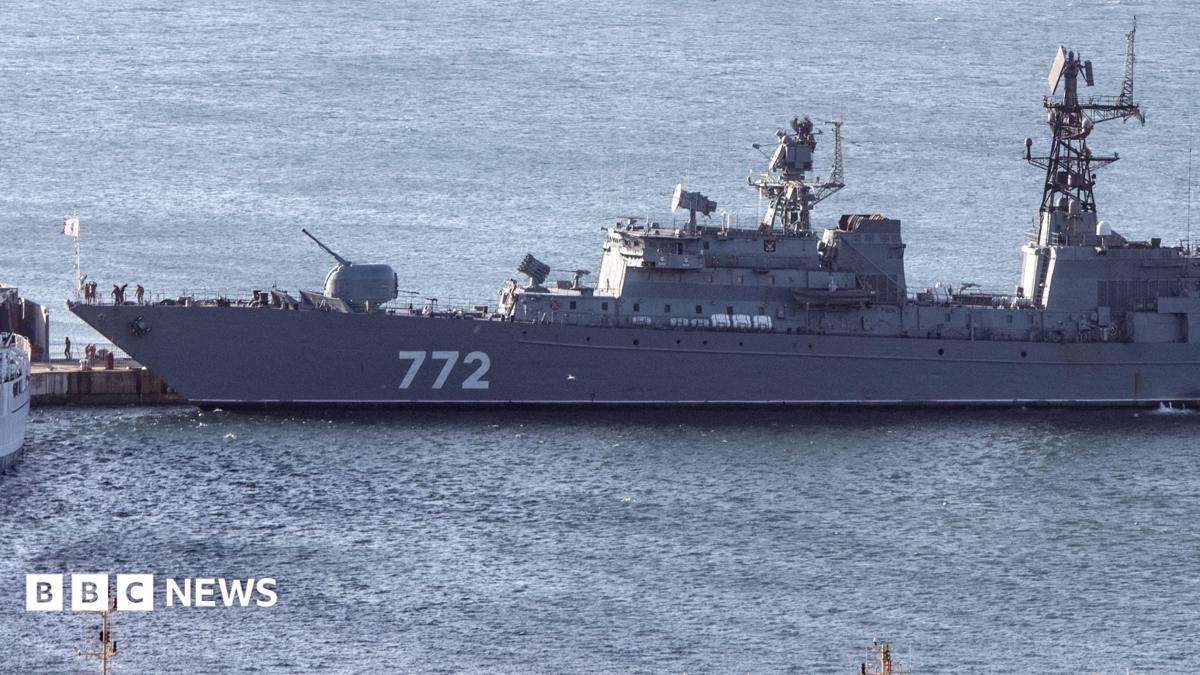
A live-fire drill involving a Russian warship recently took place in international waters, lasting around half an hour. During the exercise, the Russian vessel requested that the HMS Tyne, a ship of the Royal Navy, move to a safer distance, which the British ship complied with. At the same time, a French military aircraft was also tracking the Russian frigate and reportedly contacted it by radio to ask for clarification on its intentions, according to information obtained by the BBC.
Analysis conducted by BBC Verify using flight and maritime tracking data shed light on the area’s military activity near the Channel by Plymouth on the day in question. Records from ADS-B Exchange revealed that at least four aircraft from the Royal Air Force and Royal Navy were operating off the Dorset coast, mostly above UK territorial waters. This group included two Eurofighter Typhoon jets, a Voyager air-to-air refueling tanker, and a Super Lynx helicopter. Additionally, a French H160M Guépard helicopter was observed flying over the Channel in the afternoon, though it remains uncertain whether this was the aircraft that communicated with the Russian ship.
Ship-tracking information from MarineTraffic showed that HMS Tyne broadcast its location about 40 miles off Plymouth starting at 13:57 BST. The ship stayed in that vicinity for approximately two hours before leaving at 15:56 to head back to Plymouth. Notably, HMS Tyne has been monitoring the Russian frigate Neustrashimy since at least 16 July, when satellite imagery captured both vessels around 36 miles from Felixstowe port in Suffolk, located in the North Sea. The recent incident serves as a reminder to UK leadership of the increased presence of Russian naval forces near British waters in recent months.
Tom Sharpe, a retired Royal Navy commander, commented on the event during a BBC Radio 4 broadcast, describing the firing exercise near the south coast as “very unusual.” While acknowledging that such military activities are allowed, Sharpe viewed the drill as a deliberate signal. He noted that aside from warning HMS Tyne to reposition, the Russian ship failed to implement adequate safety measures before discharging a 100mm cannon. Sharpe emphasized the risks, explaining that shells of that calibre can bounce for miles beyond their target, posing dangers in one of the world’s most heavily trafficked shipping lanes. Reflecting on the broader context, he suggested the incident might have been a response to recent UK actions, including the boarding of a Russian “shadow fleet” oil tanker last month and an earlier encounter in June involving warning shots fired near a British couple sailing off the Isle of Wight. The commander characterized the ongoing interactions as a “tit-for-tat” reminiscent of Cold War behavior, increasingly encroaching closer to UK shores
Read the full article from The BBC here: Read More
Auto Amazon Links: No products found.