Auto Amazon Links: No products found.
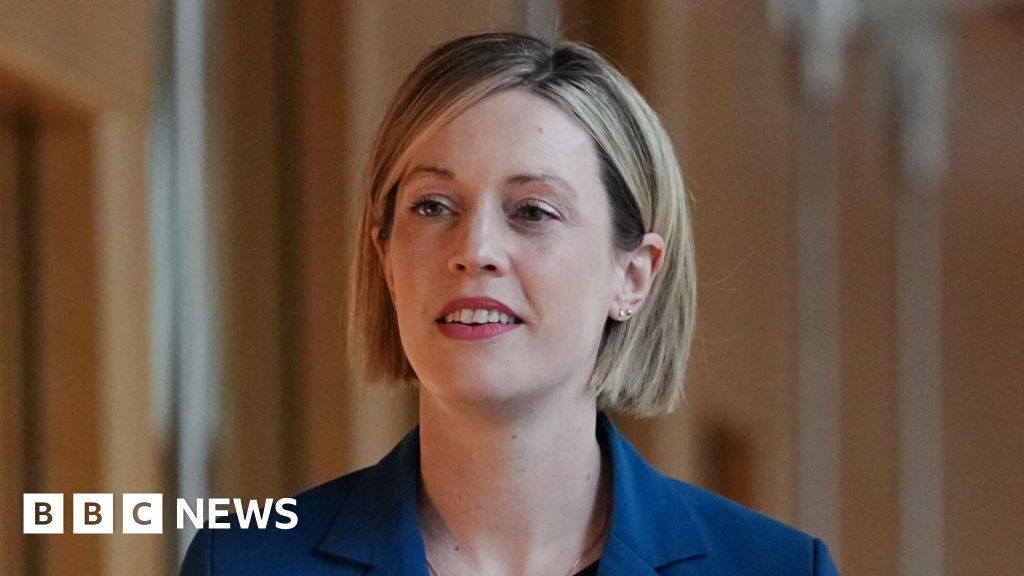
The Deputy First Minister of Scotland has acknowledged that budget cuts will almost certainly be necessary to address an anticipated deficit of nearly £5 billion by the decade’s end. Jenny Gilruth, who recently took on the combined responsibilities of Deputy First Minister and Finance Secretary, emphasized that the Scottish government has been transparent about the financial difficulties it faces. She highlighted the commitment to safeguard essential services and frontline workers even as public sector reforms are explored.
Gilruth explained that collaboration with Ivan McKee, the newly appointed Minister for Public Sector Reform, will be critical in identifying efficiencies required to navigate the financial challenges. She made clear that protecting Scotland’s most vulnerable citizens will remain a priority during times of fiscal restraint. Additionally, she noted that there is bipartisan agreement on the need to reduce the number of public sector bodies, a trend that accelerated during the pandemic and has contributed to escalating government expenses, including rising wages. Addressing cost-of-living concerns, Gilruth pointed out that the government has implemented record public sector pay deals, reflecting inflationary pressures such as soaring energy and food costs.
While striving to reduce expenditures, the government aims to preserve key services valued by the public and is considering cost-saving strategies like shared services. Gilruth also outlined the Scottish National Party’s (SNP) manifesto commitments, which focus on reorienting public services to better support families. Initiatives include measures to lower food prices, introduce a £2 cap on bus fares, and expand childcare provisions.
The announcement drew critiques from opposition politicians. Scottish Labour’s Michael Marra condemned the administration for not being clear about where cuts would be made, while Scottish Conservative finance spokesperson Craig Hoy accused the SNP’s “continuity cabinet” of failing to resolve the instability and chaos attributed to the party. From the Scottish Greens, co-leader Gillian Mackay expressed cautious openness to shared public functions but warned that many departments are already overstretched. She voiced strong concerns about potential large-scale job losses and urged the government to prioritize alternative revenue-raising methods instead of cutting vital services.
Turning to the topic of independence, the SNP intends to hold a parliamentary vote on the issue. Despite securing the most seats in the recent Scottish Parliament election, the SNP fell short of an outright majority, winning 58 out of the 129 seats, where 65 are needed to govern independently. However, with the Scottish Greens—another pro-independence party—holding a record 15 seats, a majority of parliamentarians now support independence. Gilruth emphasized the party’s longstanding governance since 2007 and framed the latest election result as a clear mandate.
She challenged the UK government to define a democratic path for Scotland to leave the union, questioning its refusal to acknowledge Scotland’s right to choose. When pressed on contingency plans should the UK government continue to deny a referendum, Gilruth stated that their plans would be presented to parliament soon, and vowed to persistently press for powers to hold a democratic independence referendum like that of 2014. The UK government reiterated its opposition to both independence and another referendum, emphasizing the importance of focusing on economic growth, living costs, and public services rather than divisive political issues
Read the full article from The BBC here: Read More
Auto Amazon Links: No products found.