Auto Amazon Links: No products found. Blocked by captcha.
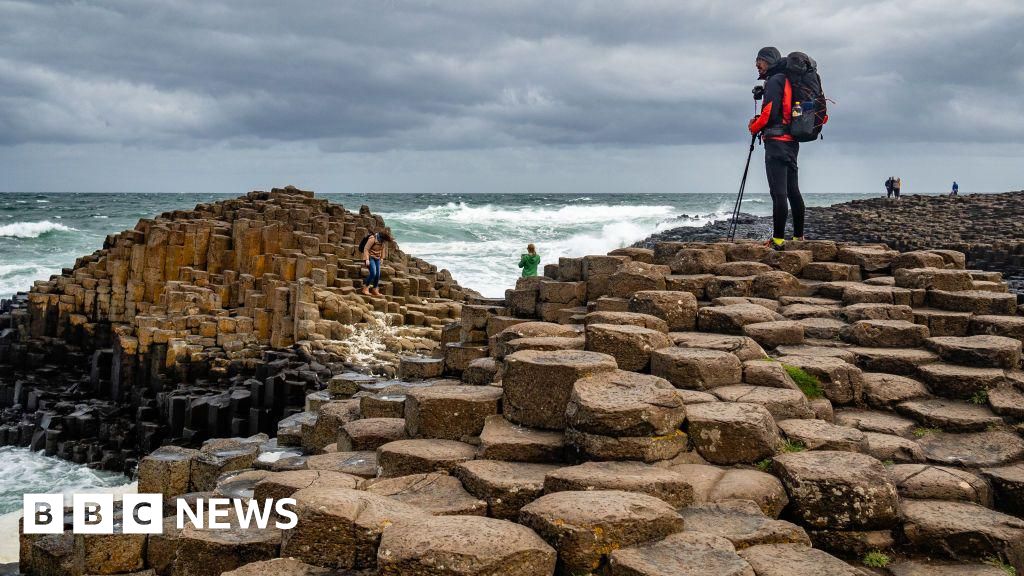
Researchers attempting to use Artificial Intelligence (AI) to estimate visitor numbers at the Giant’s Causeway encountered significant challenges due to the unique landscape’s features. The AI software was applied to commercially available drone footage capturing crowds at the iconic site near Bushmills, County Antrim. However, the distinct hexagonal rock columns, viewed from above, closely resembled human figures to the AI, causing confusion and inaccurate counting.
The specific AI tool employed was yolo-crowd, an open-source model designed for crowd counting and face detection, developed by researchers from the University of Glasgow. Despite its intended purpose, the model struggled with this particular setting. According to the team, the software performed poorly when analyzing the drone footage, failing to produce a credible estimate of attendance at the Giant’s Causeway. This difficulty stemmed from the similarity in visual patterns between the rocks and people, especially when viewed from a top-down perspective.
The researchers elaborated that object detection algorithms rely heavily on identifying patterns such as shapes, textures, and contrast to differentiate objects. They observed that the rock formations share many visual characteristics with human forms, including contours, shadows, and coloration. As a result, the AI tended to misclassify the hexagonal rocks as visitors, leading to over-counting. It was suggested that the AI’s inadequate performance was due in part to the training data lacking sufficient examples of environments like the Giant’s Causeway, causing the model to generalize incorrectly.
Looking ahead, the team believes the AI method could be more effective if the model received training on a significantly larger dataset incorporating similar landscapes. Additionally, utilizing higher-resolution drone footage—though more costly—might improve the accuracy of visitor counts at non-ticketed sites. This research was part of a broader initiative by the UK government’s Department of Culture, Media and Sport, aiming to explore digital technologies for monitoring visitor engagement at various public venues
Read the full article from The BBC here: Read More
Auto Amazon Links: No products found. Blocked by captcha.