Auto Amazon Links: No products found. Blocked by captcha.
For half a year, Brian Kennedy has endured life next to an underground blaze reaching temperatures as high as 500 degrees Celsius. This fire, burning beneath the surface of a suburban street in Coatbridge, Scotland, has forced him and his neighbors to cope with thick smoke, falling ash, and a pervasive chemical odor that some likened to living in the midst of a war zone.
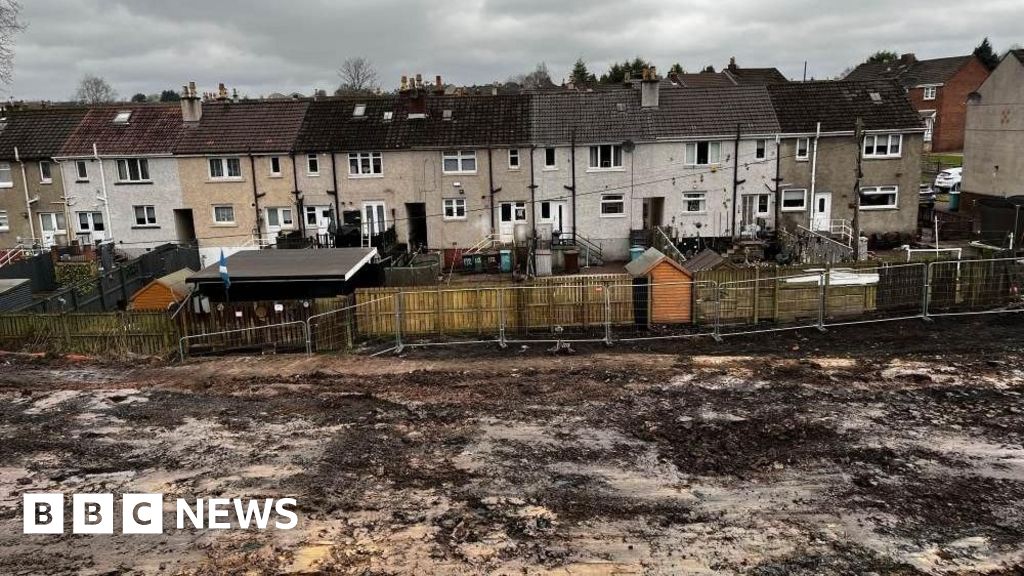
At first glance, the houses on Burleigh Street appear to be typical residences found across the west of Scotland. However, behind these homes lies a wooded area where, last summer, fires ignited deep underground, sending smoke into the air and raising serious safety concerns among residents. Subsequent investigations revealed that the subterranean fire was fueled by oil shale—a material linked to the construction of a now-defunct railway line dating back 120 years.
Brian, who was raised on Burleigh Street and returned there with his wife Allison two years ago, recounted the unsettling experience. He noted how he began to notice plumes of smoke rising from his backyard. “It’s like something out of World War One, I’m telling you,” he said. “The trenches. I grew up here, it was lovely. Lots of trees, wildlife, lovely colours. Now there’s none of that.” Similarly, Allison described living in constant fear that the fire might reach their home, recalling nights when she would rush downstairs after spotting a red glow through a bathroom window. She added, “You could hear it crackling from in the house,” and expressed frustration over the persistent dirt and soot that have rendered their garden unusable.
Residents were advised to keep doors and windows sealed throughout the fire and the extensive excavation required to extinguish it. The presence of soot made everyday activities like hanging laundry outdoors impossible, while health issues such as asthma and COPD reportedly worsened during the incident. However, local authorities have insisted that air pollution levels have remained within safe limits. Another neighbor, Andrew Gallagher, described the landscape visible from his window as resembling Chernobyl, noting the disappearance of the area’s previous flora and fauna, including deer and squirrels.
The fire presented a challenge not only for residents but for responders as well. David Haggerty, group commander for Lanarkshire with the Scottish Fire and Rescue Service, remarked that this was the first subterranean blaze he had encountered in his 25 years of service. After encountering several surface fires in July, teams began digging, escalating matters to the local council, which brought in expert engineers and contractors. Stewart Browne of the engineering firm WSP used geothermal imaging and century-old maps to identify the burning ground as a former railway site where oil shale had been buried. The cause of the ignition remains unknown.
According to Stewart, while underground fires themselves are not rare, this one was complicated by its proximity to residential houses. He described the excavation process, explaining that the burning material reached temperatures of up to 500 degrees Celsius and had to be carefully removed and cooled before disposal. He likened the excavated debris to “molten lava,” noting that cooling the fire with water created a sauna-like effect, which contributed to the ongoing smoke affecting the neighborhood. After removing approximately 30,000 tonnes of material, North Lanarkshire Council has confirmed the fire is now extinguished. Residents are hopeful that the heavy machinery will soon depart for the final time
Read the full article from The BBC here: Read More
Auto Amazon Links: No products found. Blocked by captcha.